Sandy Hill: Ottawa's Original Embassy Row
Not Exactly Prime Real Estate
Sandy Hill's name is about as literal as it gets: hilly terrain carved by the river, sitting on soil so sandy that for decades it was genuinely difficult to put up large buildings there. By any normal measure, that's a strike against a neighbourhood, not a selling point.
And yet for the better part of a century, Sandy Hill was the single wealthiest address in Ottawa.
The Origin
The neighbourhood started as an estate belonging to Louis-Théodore Besserer, who later donated land that became the University of Ottawa. Through the 19th and early 20th centuries, Sandy Hill grew into Ottawa's wealthiest neighbourhood, home to lumber barons who'd made their fortunes on the Ottawa River and, before long, the country's most senior government officials.
A Street Full of Prime Ministers
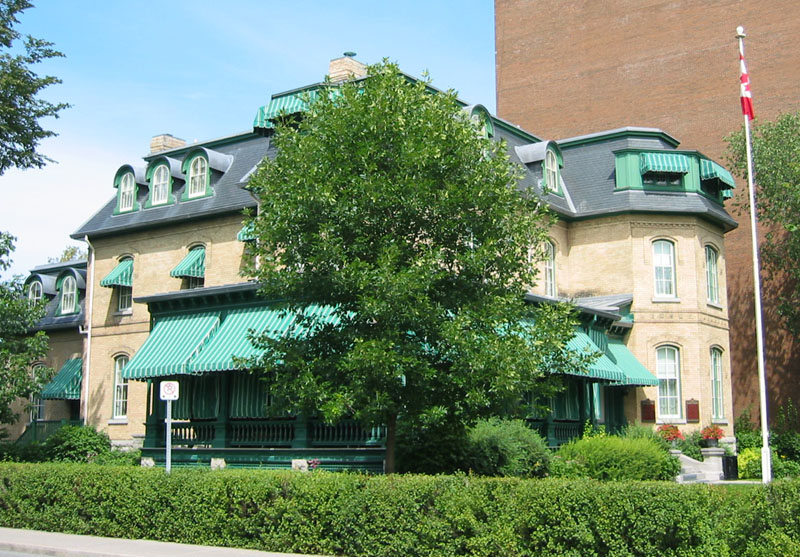
At various points, Sandy Hill was home to four Canadian prime ministers: John A. Macdonald, Wilfrid Laurier, William Lyon Mackenzie King, and Lester B. Pearson. The official residence of the Prime Minister was even located there for a time first at Stadacona Hall, and later at what's now known as Laurier House. For a stretch of Canadian history, this was simply where the country's leadership lived.
Sandy Hill's fortunes shifted once bridges, streetcars, and cars made the rest of the city easy to reach. Wealthy residents started moving out to Rockcliffe Park, and after the Second World War, many of Sandy Hill's grand old mansions were converted into embassies earning the neighbourhood its lasting nickname, "Embassy Row."
Living There Today
Sandy Hill today is one of Ottawa's most connected neighbourhoods, sitting right next to the University of Ottawa and drawing a mix of students, young professionals, and long-time residents into its condo towers and century homes alike.
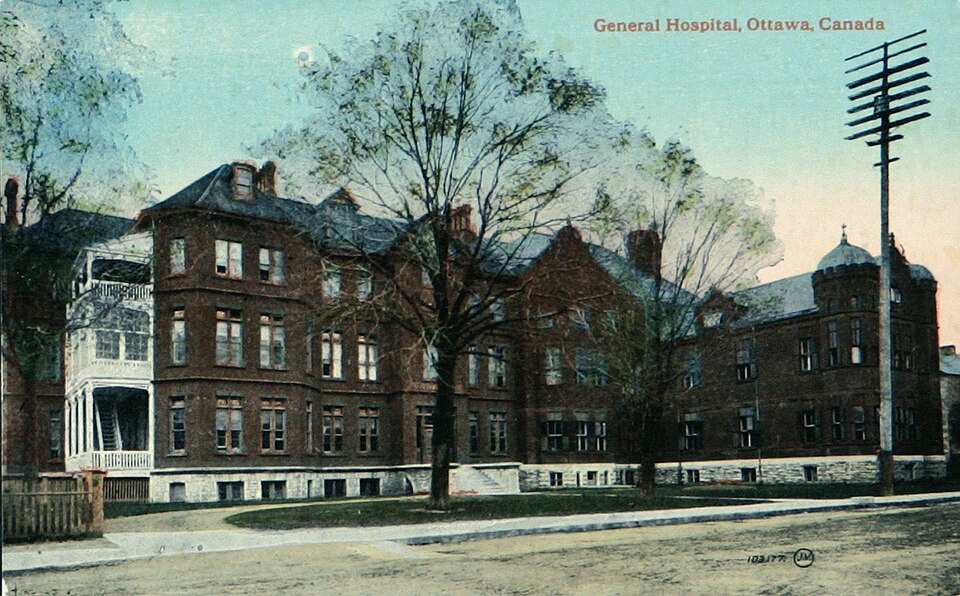
One building captures the neighbourhood's more recent history especially well: Wallis House. Built between 1873 and 1876 as the Carleton County Protestant General Hospital, it later served as a seminary and a naval barracks before falling into disrepair. In 1994 it was converted into 47 high-end condos Ottawa's first loft conversion of its kind which sold out within 24 hours of launching in 1995, a result widely credited with helping kick off Ottawa's real estate boom through the late '90s. Today it remains one of Sandy Hill's most sought-after condo buildings.
The neighbourhood's cafes and pubs cluster along its main streets, and Strathcona Park anchors its riverside edge, home to the Adàwe Crossing a pedestrian and cyclist bridge over the Rideau River that opened in 2015, linking Sandy Hill to Overbrook and giving residents an easy walk or ride along the water.
Strathcona Park itself is full of surprises. What looks like a cluster of ancient ruins scattered through the park is actually a 1990s playground installation, designed by artist Stephen Brathwaite using stone salvaged from Parliament Hill and the Château Laurier. Its wading pool dates back to the 1940s, when the park's original ponds were filled in, and the riverside path running through it connects straight into the Rideau River Eastern Pathway making the park one of the easiest green spaces in the city to spend a whole afternoon outside.
The Takeaway
Sandy Hill's address book has changed with the times from Governor General to Prime Minister to diplomat to today's mix of students, young professionals, and long-time residents but it's never really stopped being one of Ottawa's most desirable places to call home. Between the university on its doorstep, the embassies and heritage homes, and a genuinely walkable downtown location, it's easy to see why Sandy Hill has held onto its appeal for close to two centuries, long after the first wave of prime ministers moved on.
Ready to start your home buying journey in Ottawa? We'd love to be part of it. Reach out to us at OttawaSelect.ca — we work with first-time buyers regularly and know how to make a process that can feel overwhelming feel completely manageable..