
Getting Your Ottawa Home Ready to Sell This Spring: Where to Start
If selling your home this spring has been on your mind, you're not alone — and you're thinking about it at exactly the right time. Spring is consistently the most active season in Ottawa's real estate market. Buyers who have spent the winter browsing listings are finally ready to act, and a well-prepared home that hits the market in late March or April tends to benefit from that surge of renewed energy. The good news is that getting your home ready doesn't have to be overwhelming. With a clear plan and the right priorities, most Ottawa sellers can have their home show-ready in four to six weeks. Here's exactly where to start.

Understanding the Ottawa Spring Market
Before diving into the to-do list, it helps to know what you're stepping into. Ottawa's real estate market has its own personality — steadier and more balanced than Toronto or Vancouver, but with distinct seasonal rhythms that reward sellers who time their listing thoughtfully.
Spring is Ottawa's busiest buying season for good reason. Once the snow melts and daylight returns, buyers re-engage in earnest. Families with school-age children want to be settled before September. Government workers whose transfers come through in spring are actively searching. And buyers who have been pre-approved and waiting all winter are ready to write offers.
Ottawa's housing market has maintained broadly balanced conditions in recent years, with the average home selling in the range of $650,000–$712,000 depending on property type and neighbourhood. Median days on market have been hovering around 21 days, which means homes that are well-prepared and priced accurately are moving at a reasonable pace — not the frenzied bidding-war market of 2021–2022, but a steady, serious one where presentation genuinely matters.
In Ottawa's current market, where inventory has increased and buyers have more choice, two things make an outsized difference: pricing your home accurately from the start, and presenting it in a condition that photographs beautifully and shows even better in person. This post focuses on the second of those — the preparation side — because it's where most sellers have the greatest control.
Step 1: Walk Your Home With a Buyer's Eyes

The single most valuable thing you can do before anything else is to walk through your home as a stranger would — with no emotional attachment to the scuffed baseboard you've stopped seeing or the leaky tap you've been meaning to fix.
Start outside. Stand at the curb and look at your home honestly. What's the first impression? Is the paint fresh? Are the eavestroughs clean and attached? Does the front door invite you in or just exist? In Ottawa's spring, this also means assessing what winter has left behind — salt stains on walkways, dead perennials that weren't cut back, compacted or patchy lawn areas near the road.
Then walk inside room by room, slower than usual, and write things down. You're looking for:
Deferred maintenance — things that are broken, worn, or visibly dated
Clutter and personal accumulation — the stuff of a lived-in home that buyers find distracting
Odours — cooking, pets, basement mustiness; you may have stopped noticing them
Lighting — rooms that feel dark, bulbs that are out, fixtures that are dated or mismatched
Paint and surfaces — scuffs, dated colours, nail holes, worn floors
This honest assessment becomes your priority list. Not everything needs fixing — but you need to know what you're working with before you can make smart decisions about where to spend your time and money
Step 2: Tackle the High-ROI Repairs First

One of the most common questions sellers ask is: what should I spend money on before I list? The answer is almost never a major renovation — kitchens and bathrooms rarely return their full cost when done right before a sale. Instead, the highest return almost always comes from smaller, targeted improvements that make the home feel clean, well-maintained, and move-in ready.
Fresh Paint
Repainting is consistently one of the highest-return pre-sale investments available, often recovering more than 100% of its cost in improved buyer perception and final sale price. In Ottawa, the interiors that show best tend to be painted in soft, warm neutrals — think soft white, warm greige, pale linen — that read as bright and modern in listing photos without being sterile.
If a full repaint isn't in your budget, prioritize the front entryway, main living areas, and the primary bedroom. These are the spaces buyers photograph mentally (and actually) during showings. Touch up scuffs and patch nail holes everywhere else.
Don't forget the front door. A freshly painted front door in a strong, welcoming colour — deep navy, forest green, classic black — can transform curb appeal for under $100 in paint and an afternoon of effort. It's one of the most impactful small changes you can make.
Address Obvious Deferred Maintenance
Buyers in Ottawa's current balanced market are cautious. They're looking for reasons to lower their offer — and a home that shows signs of neglected maintenance gives them plenty of ammunition. Leaky taps, loose door handles, sticking doors, cracked caulking around tubs and sinks, missing outlet covers, burnt-out bulbs — none of these are expensive to fix, but collectively they signal to a buyer that the home hasn't been well cared for.
Go through your home and fix everything you notice. Book a handyman for a half-day if there's a list of small items; in Ottawa, handyman services typically run $30–$50 per hour and the investment is well worth the buyer confidence it builds.
Update Lighting
Lighting is one of the most underrated elements of a well-prepared home. Dated light fixtures — particularly brass or chrome from the 1990s or early 2000s — age a home visually in photos and in person. Replacing key fixtures in the kitchen, dining area, and primary bedroom with simple, modern alternatives is a relatively affordable update (many good options are available at IKEA or local lighting stores for $50–$200 per fixture) that changes how current and cared-for the home feels.
At minimum, ensure every bulb in the house is working and that your colour temperatures are consistent (warm white LEDs throughout, rather than a mix of warm and cool tones that creates an uncomfortable feel in photos).
Step 3: Declutter — More Than You Think You Need To

Decluttering is one of those things where every seller knows they need to do it, but almost everyone underestimates how much. The target isn't a tidy home — it's a home that feels spacious, light, and full of possibility to someone who hasn't lived in it.
A useful benchmark: aim to remove 25–30% of the visible contents of your home before listing. That means personal photos and collections, excess furniture (that second armchair, the bookshelf that crowds the hallway), countertop appliances in the kitchen, and anything in closets and storage areas that can be boxed and moved to a storage unit for the duration of your listing.
Why closets and storage? Because buyers open them. Every single one. A closet that's organized and has visible breathing room tells a buyer the home has sufficient storage. A closet packed to the ceiling with boxes tells a different story.
Some Ottawa-specific advice: if you have a basement workshop, utility area, or storage room — common in Ottawa's detached housing stock — give these areas real attention. Buyers in Ottawa are well-acquainted with older homes and they know what basements look like when they're well-maintained versus when they're a repository of 20 years of accumulated belongings. A clean, organized basement reads as a usable bonus space. A cluttered one raises questions.
What to do with everything: Rent a portable storage container (companies like PODS have Ottawa coverage), book space at a self-storage facility, or use a garage sale or donation run to reduce the volume before moving it. The less you move to storage, the less you'll be moving to your next home.
Step 4: Deep Clean Everything

This one sounds obvious, but a true pre-listing deep clean goes well beyond what most people think of as clean. This is a top-to-bottom, every-surface, every-corner clean that leaves the home in genuinely showroom condition.
The areas most commonly missed:
Windows — inside and out, including the tracks and sills
Baseboards and door frames — magnets for dust that photographs badly
Kitchen appliances — inside the oven, the refrigerator, the range hood filter
Grout in bathrooms and kitchen — yellowed or mouldy grout is one of the things buyers notice immediately and find difficult to unsee
Light fixtures and fans — accumulated dust on blades and globes reads as neglect in photos
Furnace room and utility area — often completely forgotten but visited by buyers and their inspectors
Most Ottawa sellers benefit from hiring a professional cleaning company for the pre-listing clean — budget $300–$600 for a thorough job on an average-sized home — and then maintaining that standard themselves for the duration of showings.
If you have pets, know that buyers will notice. Have upholstery professionally cleaned, launder all soft furnishings, and ensure the home is aired out thoroughly before showings. Consider temporarily relocating pets and their belongings during the listing period if possible.
Step 5: Spring Curb Appeal — Ottawa Edition

Curb appeal is always important; in spring Ottawa, it's particularly so because your home is competing against a sudden influx of new listings after a quieter winter. The buyer driving past in April or May is making a judgment about your home before they even park the car.
The spring curb appeal checklist for Ottawa sellers:
Immediately after snowmelt:
Clear all winter debris — salt stains on walkways, fallen branches, remnants of last year's leaves that didn't get cleaned up in fall
Power wash the driveway, walkways, and any exterior decks or patios
Clean eavestroughs of winter debris
Wash the exterior of windows from the outside
Once the ground has thawed:
Edge garden beds and apply fresh mulch — this is one of the fastest, most impactful things you can do for curb appeal, and a few hours of work and a couple of bags of mulch transforms the look of the front garden entirely
Cut back any perennials that weren't trimmed in fall
Plant early-season colour — pansies and violas are cold-hardy annuals available at Ottawa nurseries from late April and will survive light frosts, giving you cheerful colour in planters and beds during your listing period
Year-round exterior checklist:
Check the condition of the front door — paint or replace if needed
Replace house numbers if they're faded or dated
Clean or replace the welcome mat
Ensure exterior lights work and consider timer settings so the home looks welcoming for evening drive-bys
Inspect the roof and eavestroughs visually for obvious issues — if you notice missing shingles or sagging gutters, address these before listing so they don't show up as red flags in a buyer's home inspection
Step 6: Consider Staging — at least partially

Home staging is not about making your home look like a magazine; it's about helping buyers see themselves living there. That means removing personal photographs and collections, arranging furniture to showcase flow and space, and ensuring the home feels welcoming rather than like someone else's very personal space.
Professional home staging in Ottawa typically runs $1,500–$4,000 depending on scope — whether you need rental furniture for a vacant home, or simply a stager to work with what you have. For many Ottawa sellers, a "light staging" approach works very well: a professional consultation combined with selective decluttering, furniture rearrangement, and the addition of fresh soft goods (new white towels in bathrooms, fresh bedding, a simple centrepiece on the dining table) makes a meaningful difference without the full rental cost.
At minimum, before professional photos are taken:
Make beds with fresh, neutral-toned bedding
Clear all kitchen and bathroom countertops to as bare as practically possible
Remove family photos, children's artwork from refrigerators, and personal collections
Add a few simple, fresh touches — a bowl of fruit in the kitchen, a vase of tulips on the dining table (spring listings are perfect for this in Ottawa)
Ensure all window coverings are open and the home is flooded with as much natural light as possible
Step 7: Professional Photography is Non-negotiable

More than 95% of Canadian buyers begin their home search online. Your listing photos are your first showing — often the only chance you get to convince a buyer to book an in-person visit. This is not the place to cut corners.
Good real estate photography in Ottawa typically costs $200–$500 and the difference it makes in online engagement — clicks, saves, showing requests — is significant. A professional photographer with real estate experience will know how to handle Ottawa's challenging spring light (bright but low, with strong shadows), how to make rooms look spacious without distortion, and how to showcase the outdoor and garden spaces that matter so much to spring buyers.
Ask your agent whether they include professional photography and videography as part of their listing package — many Ottawa agents do, and this is a question worth asking upfront.
Working with a Local Ottawa Agent: Why it Matters
Preparing your home well is the foundation. But the strategy layer — pricing, timing, negotiation, and marketing — is where a knowledgeable local agent earns their value in Ottawa's current market.
With active listings up and buyers having more choice than they did in tighter years, accurate pricing from day one is critical. Homes that are overpriced and then reduced sit on the market longer and typically sell for less than homes that were priced correctly to begin with. An experienced Ottawa agent will bring a current comparative market analysis, know what's selling and what's sitting in your specific neighbourhood, and help you understand the difference.
The best time to bring your agent in? Before you start the preparation work. A good agent will walk through your home with you, tell you honestly what needs attention and what doesn't, and help you prioritize your time and money. Some improvements that seem important may not matter to Ottawa buyers in your price range; others that seem minor might be exactly what the market responds to.
Your Ottawa home buying timeline at a glance
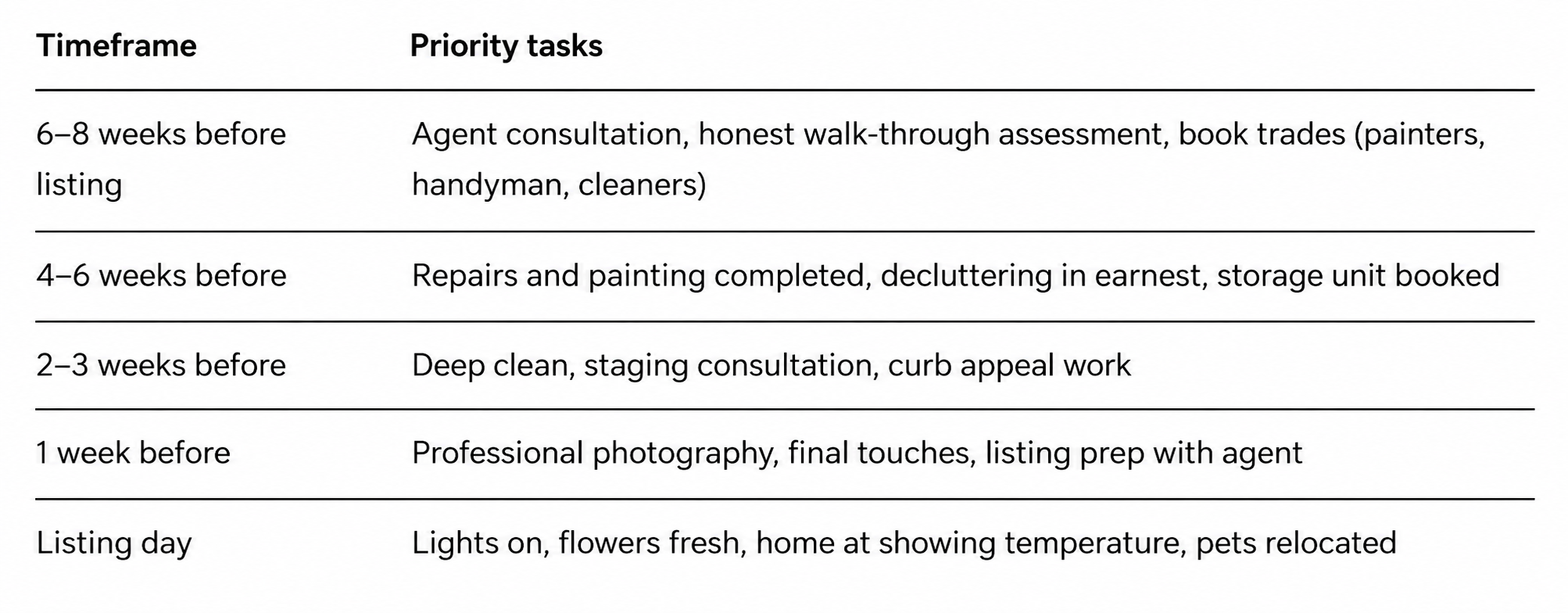

Frequently asked questions:
When is the best time to sell a house in Ottawa?
Spring — broadly March through June — is Ottawa's most active selling season, with the highest buyer demand and most competitive conditions. Listing in late March or April captures buyers who have been waiting through winter and are motivated to act. Fall (September and October) is a solid secondary window. Summer can be quieter as families are occupied with vacations and outdoor life. Winter listings are possible but typically see slower activity and a smaller buyer pool.
How do I prepare my home for sale in Ottawa?
Start with a clear-eyed assessment of your home's condition from a buyer's perspective. Then prioritize: fresh neutral paint, addressed deferred maintenance, thorough decluttering, a deep clean, and strong spring curb appeal. Work with a local agent early so you can focus your preparation efforts on what actually moves the needle for your price range and neighbourhood.
How much does it cost to prepare an Ottawa home for sale?
Costs vary significantly by property condition and scope of work. Budget roughly $300–$600 for professional cleaning, $500–$2,000 for targeted painting (touch-ups to full repaint), $200–$500 for professional photography, and $1,500–$4,000 for professional staging if needed. Modest repairs through a handyman typically run $30–$50 per hour. A well-spent $3,000–$5,000 on preparation commonly returns multiples in final sale price and days on market.
How long does it take to sell a home in Ottawa?
In Ottawa's current market, the median days on market is around 21 days for homes that are well-prepared and accurately priced. Homes that need work, are overpriced, or have presentation issues often sit considerably longer. The preparation work you do before listing directly influences how quickly and how well your home sells.
Do I need to stage my home to sell in Ottawa?
Not necessarily — but some form of staging almost always helps. Full professional staging (with furniture rental) is valuable for vacant homes or properties at higher price points. For occupied homes, a light staging approach — professional consultation, strategic decluttering, and fresh soft goods — typically provides excellent return on investment. At minimum, ensure your home is thoroughly decluttered and depersonalized before listing photos are taken.
What repairs should I make before selling my home in Ottawa?
Focus on deferred maintenance and high-visibility cosmetic issues rather than major renovations. Fix leaky taps, sticking doors, broken fixtures, and damaged caulking. Address any obvious exterior wear — peeling paint, loose eavestroughs, damaged walkways. Repaint in neutral colours where needed. Avoid large kitchen or bathroom renovations immediately before selling; these rarely return their full cost and can delay your listing timeline.
How should I price my Ottawa home?
Pricing is one of the most important decisions in the selling process, and it's one where local expertise matters enormously. Your agent will prepare a comparative market analysis (CMA) based on recent sales of comparable homes in your neighbourhood. In Ottawa's current balanced market, accurate pricing from day one is critical — overpriced homes typically take longer to sell and ultimately net less than homes priced correctly from the start.
What are the costs of selling a home in Ottawa?
The primary costs include real estate commission (typically 3.5–5% of the sale price, split between buyer and seller agents), legal fees ($1,500–$2,500 for a real estate lawyer), and any mortgage discharge penalties if applicable. You'll also want to factor in your pre-listing preparation costs. Your agent should be able to walk you through a net proceeds estimate before you list so you have a clear financial picture.
Should I get a pre-listing home inspection in Ottawa?
Some Ottawa sellers choose to commission a pre-listing inspection so they know exactly what a buyer's inspector will find — and can address issues proactively or price accordingly. It's not required, but it eliminates uncertainty and can make your listing more attractive to buyers (particularly in a market where buyers are taking their time). Talk to your agent about whether it makes sense for your specific property and neighbourhood.
Ready to think through what selling your Ottawa home might look like this spring? We'd love to have that conversation. Reach out to us at OttawaSelect.ca — we know Ottawa's neighbourhoods, we know the current market, and we'll help you put together a plan that makes sense for your home and your timeline.