
The Great Fire of 1900: How a Single Day Reshaped Ottawa's Real Estate
The Great Fire of 1900: How a Single Day Reshaped Ottawa's Real Estate
A Chimney, a Windy Day, and Two Cities
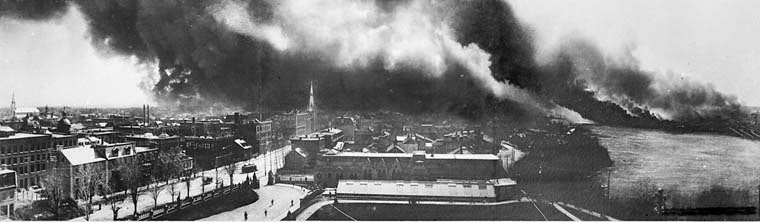
On the morning of April 26, 1900, a defective chimney in a house in Hull caught fire. On its own, that's a small, forgettable event. But it was an unusually windy day, the surrounding buildings were wood, and within two hours the fire had torn through Hull and reached the riverfront, where it found exactly the wrong thing to meet it: mountains of stored lumber waiting to be shipped.
By early afternoon, wind-driven embers were being carried clear across the Ottawa River, and the fire that had started in one chimney was now burning in two cities at once.
A Fifth of Ottawa, Gone in an Afternoon
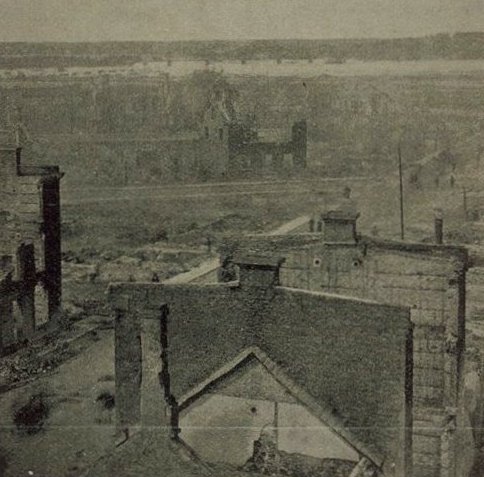
By the time it burned out, the fire had destroyed two-thirds of Hull and roughly a fifth of Ottawa, with the worst of it concentrated in the strip between Booth Street and the rail line what's now the LeBreton Flats and Mechanicsville area. E.B. Eddy's mills, the McKay flour mills at the Chaudière, two ironworks, and the city's own electric railway and lighting company were all destroyed. Parliament itself had to adjourn.
About 15,000 people were left homeless 14 percent of Ottawa's population and 42 percent of Hull's. Seven people died in the fire itself, and more died afterward from disease in the overcrowded tent camps that followed. Combined property damage came to roughly $9.5 million, and insurance covered only about half of Ottawa's losses and less than a quarter of Hull's.
The Neighbourhood the Fire Never Reached
One small detail decided a lot of what came next: Hintonburg, just west of the worst damage, was largely spared because the Canadian Pacific and Canadian Atlantic rail lines acted as a firebreak. Only four houses there were lost.
That near-miss turned Hintonburg into the obvious place to land. Families displaced from LeBreton Flats and Preston moved in, and businesses that had been burned out relocated there too, giving the neighbourhood a population and economic boost it wouldn't otherwise have had. Across the wider Ottawa-Hull area, rebuilding moved fast: roughly 750 homes went up again before the end of that same year.
The Takeaway
A disaster doesn't just destroy value, it can redistribute it. The families and businesses burned out of LeBreton Flats and Preston didn't disappear, and they didn't wait around either. Hintonburg, spared by a lucky rail line, absorbed them and grew because of it, and across the whole Ottawa-Hull area roughly 750 homes were already back up before the year was out. A city that lost a fifth of itself in a single afternoon had most of it standing again within twelve months.
Ready to start your home buying journey in Ottawa? We'd love to be part of it. Reach out to us at OttawaSelect.ca — we work with first-time buyers regularly and know how to make a process that can feel overwhelming feel completely manageable.